Best Twilight Zone Episodes: 25 Best Episodes Ranked
If you’re searching for the best Twilight Zone episodes, you’ve come to the right place. Rod Serling’s groundbreaking anthology series didn’t just define science fiction television-it created a template for psychological storytelling that influences everything from film noir to modern prestige TV. The show’s genius wasn’t aliens or time travel. It was holding up a mirror to humanity and showing us the darkness we’d rather not see.
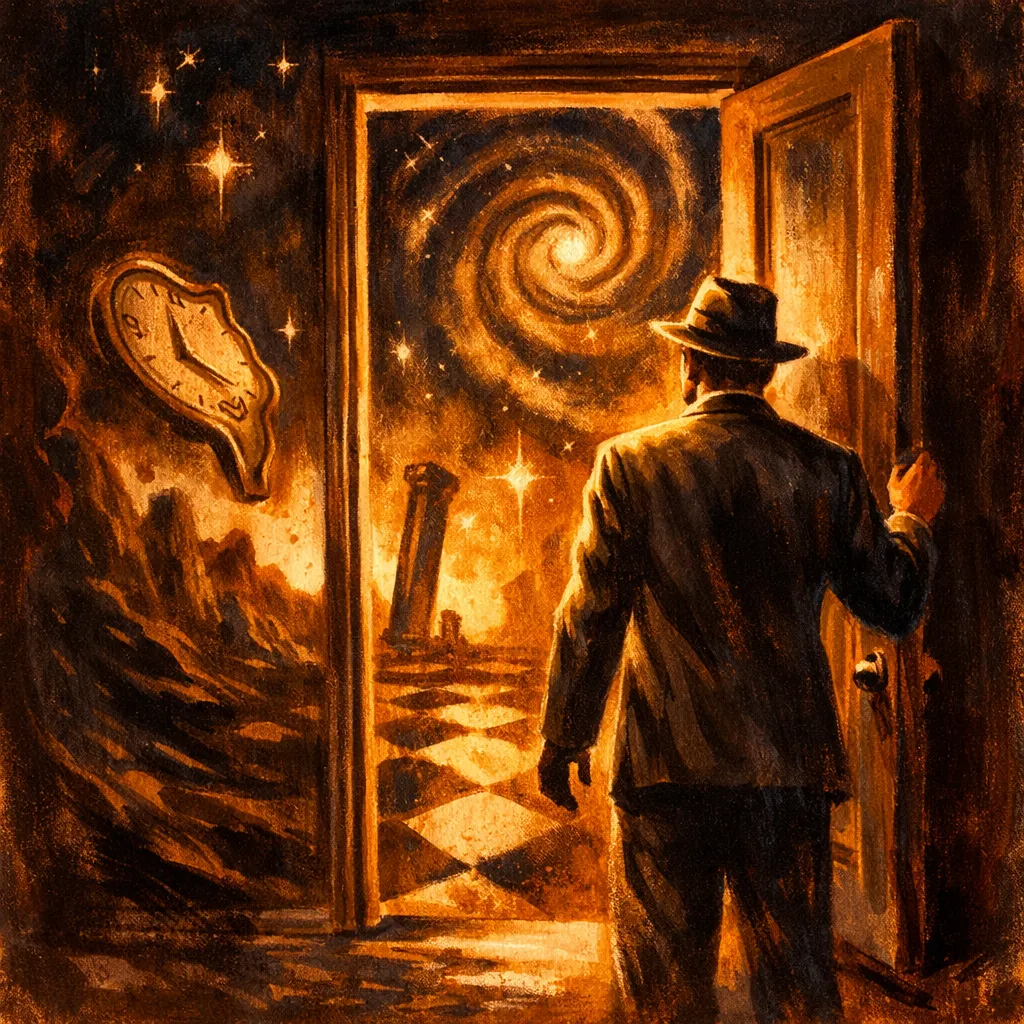
Whether you’re discovering The Twilight Zone for the first time or revisiting classics you haven’t seen in years, these 25 episodes represent the absolute best the series has to offer. I’ve ranked them based on psychological impact, storytelling craft, and that ineffable quality that makes certain episodes burrow into your brain and refuse to leave. As someone who creates noir detective audio drama and grew up on my grandfather’s old-time radio collection, I have a deep appreciation for Serling’s ability to blend mystery, morality, and the macabre.
Let’s step into the fifth dimension.
📺 Where to Watch: The original Twilight Zone series is available free on Tubi and Pluto TV, or with a subscription on Paramount+.
Quick Answer: Best Twilight Zone Episodes (Top 10)
The 10 essential Twilight Zone episodes every viewer should start with:
- The Monsters Are Due on Maple Street (S1E22) – Paranoia destroys a neighborhood
- Time Enough at Last (S1E8) – The cruelest irony in television history
- Eye of the Beholder (S2E6) – Beauty is terrifyingly subjective
- It’s a Good Life (S3E8) – A child with godlike powers
- Nightmare at 20,000 Feet (S5E3) – Shatner vs. the gremlin
- To Serve Man (S3E24) – The most famous twist in TV history
- The Invaders (S2E15) – Perspective changes everything
- Living Doll (S5E6) – Talky Tina will haunt your dreams
- Walking Distance (S1E5) – Nostalgia as prison
- The Masks (S5E25) – Your true face revealed
Keep reading for detailed reviews of all 25 essential episodes, plus where to watch each one.
Best Twilight Zone Episodes at a Glance
The Monsters Are Due on Maple Street
Season 1, Episode 22 • Best for: Social commentary
Time Enough at Last
Season 1, Episode 8 • Best for: Tragic irony
Eye of the Beholder
Season 2, Episode 6 • Best for: Visual storytelling
Nightmare at 20,000 Feet
Season 5, Episode 3 • Best for: Pure terror
To Serve Man
Season 3, Episode 24 • Best for: Twist endings
Walking Distance
Season 1, Episode 5 • Best for: Emotional depth
The Howling Man
Season 2, Episode 5 • Best for: Atmospheric horror
The Long Morrow
Season 5, Episode 15 • Best for: Romantic tragedy
Table of Contents
- What Makes a Great Twilight Zone Episode?
- The Top 10 Best Twilight Zone Episodes
- Episodes 11-20: Essential Viewing
- Episodes 21-25: Hidden Gems
- Where to Watch The Twilight Zone
- Frequently Asked Questions
- Start Your Twilight Zone Journey
What Makes a Great Twilight Zone Episode?
Before we dive into the rankings, let’s talk about what separates the iconic episodes from the merely good ones. The Twilight Zone ran for 156 episodes across five seasons (1959-1964), and not all of them hold up equally well.
The best Twilight Zone episodes share certain qualities: they have a clear moral or psychological premise, they feature twist endings that feel earned rather than cheap, and they use their supernatural or science fiction elements to illuminate something true about human nature. Rod Serling wasn’t interested in aliens for the sake of aliens-he used them as metaphors for prejudice, conformity, and the dark corners of the human psyche.
The show also pioneered techniques that would become standard in audio drama and anthology storytelling: the unreliable narrator, the twist that recontextualizes everything you’ve seen, the slow build of dread. If you’ve ever enjoyed Black Mirror, you’re watching Serling’s DNA at work.
My ranking criteria:
- Psychological impact – Does it stay with you?
- Storytelling craft – Is the twist earned?
- Rewatchability – Does it hold up on multiple viewings?
- Cultural influence – Has it become part of our shared vocabulary?
Now let’s count down the 25 best Twilight Zone episodes of all time.
The Top 10 Best Twilight Zone Episodes
The Monsters Are Due on Maple Street
Season 1, Episode 22 • March 4, 1960 • 25 minutes
Watch free on: Tubi
A peaceful suburban neighborhood experiences a power outage. Lights flicker. Cars won’t start. A young boy suggests aliens might be responsible-and that they might have sent scouts disguised as humans. Within hours, neighbors who’ve known each other for years are accusing each other of being alien infiltrators. By dawn, shots have been fired.
This is the most important Twilight Zone episode ever made, and it’s not close. Serling wrote it as a direct commentary on McCarthyism, but its message transcends any specific era. The real monsters aren’t aliens-they’re ordinary people who turn on each other at the first sign of uncertainty. The final scene, showing actual aliens watching the chaos unfold, confirms they didn’t need to fire a single weapon. They just needed to cut the power and let human nature do the rest.
Why it’s essential: This episode has been taught in schools for decades because its message never stops being relevant. Whenever you see a community tear itself apart over fear and suspicion, you’re watching Maple Street happen in real time.
The line that haunts: “The tools of conquest do not necessarily come with bombs and explosions and fallout. There are weapons that are simply thoughts, attitudes, prejudices.”
Time Enough at Last
Season 1, Episode 8 • November 20, 1959 • 25 minutes
Watch free on: Tubi
Henry Bemis (Burgess Meredith) is a meek bank teller who wants nothing more than to read. His wife mocks him. His boss berates him. He can never find a quiet moment with his beloved books. Then nuclear war wipes out civilization while Henry happens to be in the bank vault. He emerges to find himself the last man on Earth, surrounded by the ruins of a library. Finally, time enough at last! And then… his glasses break.
The final shot of Meredith surrounded by books he can no longer read is the most devastating image in television history. The cruelty isn’t cosmic indifference-it’s specifically targeted at this one harmless man who asked for so little. The universe gave him exactly what he wanted and then snatched it away.
Why it’s essential: This is the episode that defines The Twilight Zone’s cruel irony. Every anthology show since has tried to replicate this gut-punch, and none have succeeded so completely.
Fun fact: Burgess Meredith appeared in four Twilight Zone episodes, making him one of the show’s most frequent leading actors.
Eye of the Beholder
Season 2, Episode 6 • November 11, 1960 • 25 minutes
Watch free on: Tubi
A woman named Janet Tyler lies in a hospital bed, her face wrapped in bandages. She’s undergone her eleventh surgery to correct her “hideous” deformity. The doctors and nurses speak sympathetically but remain in shadow-we never see their faces. When the bandages come off, we finally see Janet: she’s beautiful by conventional standards. But the medical staff gasp in horror. The camera reveals them: they all have pig-like faces. In this world, Janet is the monster.
Director Douglas Heyes shot this episode almost entirely in shadows and tight angles, hiding the faces of everyone except Janet until the final reveal. It’s a masterclass in visual storytelling that proves the medium can be as artful as cinema. The message about conformity and the arbitrary nature of beauty standards hasn’t aged a day.
Why it’s essential: This is the most visually sophisticated episode of the series. It proves that a modest TV budget and black-and-white photography can create something genuinely artistic.
The reveal: The pig-faced society isn’t evil-they genuinely believe they’re helping Janet. That’s what makes it terrifying.
It’s a Good Life
Season 3, Episode 8 • November 3, 1961 • 25 minutes
Watch free on: Tubi
Six-year-old Anthony Fremont (Billy Mumy) has godlike psychic powers. He’s removed his small Ohio town from the rest of the world. He can read minds, transform people into grotesque creatures, or simply wish them into “the cornfield”-a fate worse than death. The adults in his life must constantly think happy thoughts and tell Anthony that everything he does is “good.” One man finally snaps and tells Anthony the truth. It doesn’t end well for him.
This episode works because Anthony isn’t evil in a conventional sense-he’s a child. He has tantrums. He wants things. He has no empathy because children haven’t developed empathy yet. Now give that child unlimited power and remove any possibility of discipline. The adults aren’t being cowardly by appeasing him. They’re being realistic.
Why it’s essential: “Wished into the cornfield” has become part of our cultural vocabulary. The episode is a perfect metaphor for any situation where power is held by someone who can’t be reasoned with or held accountable.
Chilling detail: Everyone forces smiles while their eyes show pure terror. The acting from the adult cast is extraordinary.
Nightmare at 20,000 Feet
Season 5, Episode 3 • October 11, 1963 • 25 minutes
Watch free on: Tubi
Bob Wilson (William Shatner) has just recovered from a nervous breakdown and is terrified of flying. On a stormy night flight, he looks out the window and sees a creature on the wing, tearing at the engine. Every time someone else looks, the gremlin disappears. Bob’s wife and the flight crew assume he’s having another breakdown. But Bob knows what he saw.
This is pure psychological terror. Shatner reportedly stayed awake for 36 hours before filming to give his performance that unhinged, desperate quality. The question the episode poses is brilliant: Would you rather be crazy, or would you rather be right about something no one else believes? Both options are nightmares.
Why it’s essential: The most referenced Twilight Zone episode in pop culture. Parodied by The Simpsons, referenced in countless films, and remade for Twilight Zone: The Movie with John Lithgow.
The final shot: The camera reveals damage to the plane’s engine, validating everything Bob said. He was right. And no one will ever believe him.
To Serve Man
Season 3, Episode 24 • March 2, 1962 • 25 minutes
Watch free on: Tubi
Nine-foot-tall aliens called Kanamits arrive on Earth with promises of peace, advanced technology, and solutions to humanity’s problems. They seem benevolent. A cryptographer works to translate their language, starting with a book whose title he decodes as “To Serve Man.” Humanity embraces the Kanamits. Thousands board ships to visit their paradise planet. Then the cryptographer’s assistant finishes translating the book…
“It’s a cookbook.”
Three words that changed television. The double meaning of “serve” creates what might be the most famous twist ending in TV history. But the episode works not just because of the twist-it works because the Kanamits really did end war, cure disease, and solve our energy crisis. They just had ulterior motives.
Why it’s essential: This episode has been spoiled so many times that younger viewers might know the twist before they see it. Watch it anyway. The execution is perfect.
Dark humor: The episode is surprisingly funny, with dry commentary about humanity’s willingness to trust anyone offering free stuff.
The Invaders
Season 2, Episode 15 • January 27, 1961 • 25 minutes
Watch free on: Tubi
An old woman (Agnes Moorehead) living alone in a rustic farmhouse is attacked by tiny creatures in spacesuits that emerge from a miniature flying saucer. She fights them off with knives and fire, eventually destroying their ship. As it burns, we hear a radio transmission: “Gresham to headquarters… we’ve been destroyed by a giant… civilization far in advance of ours…” The camera reveals writing on the wreckage: “U.S. Air Force Space Probe No. 1.”
Agnes Moorehead delivers a tour-de-force performance without speaking a single word. The entire episode is told through her physical acting as she battles what appear to be hostile alien invaders. The twist recontextualizes everything: we were rooting for the “monster” the whole time. Those tiny creatures were us.
Why it’s essential: A masterclass in perspective and how storytelling can manipulate our sympathies. Also proof that great acting transcends dialogue.
Connection to noir: Like the best film noir, this episode forces us to question our assumptions about who the heroes and villains really are.
Living Doll
Season 5, Episode 6 • November 1, 1963 • 25 minutes
Watch free on: Tubi
“My name is Talky Tina, and I’m going to kill you.”
Erich Streator (Telly Savalas) is a bitter stepfather who resents his wife’s daughter. When the girl receives a talking doll named Tina, the doll begins speaking only to Erich-and her messages grow increasingly threatening. Is the doll possessed? Is Erich imagining things? Or is something darker at work?
This episode launched a thousand horror movies. Chucky, Annabelle, every killer doll in cinema history owes a debt to Talky Tina. But what makes this episode special is the ambiguity. Tina might be protecting the little girl from an abusive stepfather. Or she might be something far more sinister. The episode refuses to clarify.
Why it’s essential: The doll’s sing-song voice saying “I’m going to kill you” is genuinely terrifying. June Foray (Rocky the Flying Squirrel) voiced Tina, proving even cartoon legends can give you nightmares.
The ending: “My name is Talky Tina, and you’d better be nice to me.” Addressed to the mother. Tina isn’t done.
Walking Distance
Season 1, Episode 5 • October 30, 1959 • 25 minutes
Watch free on: Tubi
Martin Sloan, a burned-out advertising executive, finds himself mysteriously transported to his childhood hometown-not as it exists now, but as it existed in his youth. His parents are alive. The carousel still plays. He’s even able to see himself as a boy. Desperate to recapture his lost innocence, Martin tries to connect with his younger self, but his father warns him: “You’ve been looking behind you. Try looking ahead.”
This is Rod Serling’s most personal script, based on his own nostalgia for his hometown of Binghamton, New York. The episode isn’t about science fiction-it’s about the universal experience of wishing you could go back. Martin learns that nostalgia, however comforting, is ultimately a trap. You can visit the past, but you can’t live there.
Why it’s essential: The most emotionally complex episode of the series. It’s not scary, it’s not ironic-it’s just deeply, profoundly sad in a way that lingers.
The score: Bernard Herrmann’s music for this episode is hauntingly beautiful, all carousel melodies and bittersweet strings.
The Masks
Season 5, Episode 25 • March 20, 1964 • 25 minutes
Watch free on: Tubi
A dying millionaire invites his greedy, selfish family to his New Orleans home during Mardi Gras. He presents them with grotesque masks-one for each family member-and demands they wear them until midnight if they want their inheritance. The daughter’s mask shows cruelty. The son-in-law’s shows cowardice. The grandson’s shows self-absorption. At midnight, the old man dies, and the family removes their masks to discover their faces have permanently transformed to match.
Directed by Ida Lupino-one of the only women directing television at the time-this episode is a vicious fable about karma. The family’s external ugliness finally matches their internal ugliness. It’s Gothic horror at its finest.
Why it’s essential: A perfect morality play with zero ambiguity. Sometimes you want the villains to get exactly what they deserve.
The final image: The family screaming as they look in mirrors, their true faces finally visible to everyone.
Episodes 11-20: Essential Viewing
The Howling Man
Season 2, Episode 5 • November 4, 1960 • 25 minutes
Watch free on: Tubi
An American traveler seeks shelter in a European monastery and discovers they’re holding a prisoner who claims to be falsely accused. The monks insist the man is actually the Devil himself. The traveler doesn’t believe in such superstition and frees the prisoner. The transformation that follows is unforgettable.
This episode features some of the most striking imagery in the series. The shadowy monastery, the prisoner’s pleading eyes, and the horrifying transformation sequence all combine to create atmospheric horror that rivals classic horror cinema.
Why it’s essential: A meditation on skepticism and when it becomes dangerous. Sometimes the crazy old monks are right.
Nick of Time
Season 2, Episode 7 • November 18, 1960 • 25 minutes
Watch free on: Tubi
Newlyweds Don and Pat Carter stop at a small-town diner where Don becomes obsessed with a fortune-telling machine. It seems to be predicting the future with uncanny accuracy. Is the machine supernatural? Or is Don just seeing patterns that aren’t there?
William Shatner’s second (and better) Twilight Zone appearance. Unlike “Nightmare at 20,000 Feet,” this episode is subtle and psychological. The Mystic Seer machine with its devil-head design became iconic, but the real horror is watching a man willingly surrender his free will to superstition.
Why it’s essential: A quiet masterpiece about how fear of uncertainty can trap us more surely than any external force.
The Shelter
Season 3, Episode 3 • September 29, 1961 • 25 minutes
Watch free on: Tubi
When a radio bulletin warns of incoming nuclear missiles, Dr. Bill Stockton’s neighbors suddenly realize he’s the only one with a bomb shelter. As panic sets in, longtime friends turn violent, demanding entry to a shelter built for three. Then the all-clear sounds. It was a false alarm.
Like “Monsters Are Due on Maple Street,” this episode examines how quickly civilization crumbles under pressure. But this one is even more disturbing because the threat was real (to the characters) and their behavior was a rational response to impossible circumstances. The ending offers no comfort: the neighbors apologize, but everyone knows what they’re capable of now.
Why it’s essential: Written at the height of Cold War paranoia, this episode asks: What is your neighbor worth to you when survival is on the line?
The Obsolete Man
Season 2, Episode 29 • June 2, 1961 • 25 minutes
Watch free on: Tubi
In a totalitarian future, librarian Romney Wordsworth (Burgess Meredith again) is declared obsolete because books have been banned. He accepts his death sentence but requests that his final hour be televised-and that the Chancellor who condemned him be present. His quiet revenge is devastating.
This episode is unsubtle in its politics, and that’s the point. Serling wasn’t interested in being even-handed about totalitarianism. The scene where Wordsworth reads from his hidden Bible while the Chancellor panics is triumphant in a way The Twilight Zone rarely allows.
Why it’s essential: A celebration of individual dignity in the face of state power. Meredith’s gentle defiance is unforgettable.
A Stop at Willoughby
Season 1, Episode 30 • May 6, 1960 • 25 minutes
Watch free on: Tubi
Advertising executive Gart Williams is trapped in a miserable job with a shrewish wife. During his evening commute, he keeps dreaming of a peaceful 1880s town called Willoughby, where life is simple and everyone is kind. One night, he decides to stay.
A companion piece to “Walking Distance,” this episode is darker-Gart’s escape to Willoughby has a grimmer real-world explanation. The final shot of the hearse reveals what really happened when he stepped off that train. Sometimes the only escape from modern life is no escape at all.
Why it’s essential: Serling’s most direct commentary on the soul-crushing nature of corporate America. It resonates even more today.
The Long Morrow
Season 5, Episode 15 • January 10, 1964 • 25 minutes
Watch free on: Tubi
Astronaut Commander Douglas Stansfield is assigned a 40-year round-trip mission to a distant star. He’ll travel in suspended animation and return the same age he left. Before departure, he falls deeply in love with Sandra, a young laboratory technician. Knowing she’ll age 40 years while he remains young, Stansfield secretly disconnects his suspension chamber. He’ll age with her, he decides. But Sandra makes her own decision…
This episode destroyed me. Unlike most Twilight Zone tragedies, there’s no cosmic punishment here, no ironic twist of fate. Just two people who loved each other so much they made opposite sacrifices-and the universe’s indifference to their devotion. She went into suspension to stay young for him. He aged himself to grow old with her. They each gave up everything for the other, and that’s precisely why they lost each other.
Why it’s essential: The most emotionally devastating love story the series ever told. No monsters, no aliens, just the cruel mathematics of time and good intentions gone wrong.
The line that breaks you: “You see, she did love him.”
Five Characters in Search of an Exit
Season 3, Episode 14 • December 22, 1961 • 25 minutes
Watch free on: Tubi
A Major, a Clown, a Ballerina, a Bagpiper, and a Hobo wake up in a cylindrical room with no memory of who they are or how they got there. They argue about existence and attempt escape. When one finally succeeds, the truth is revealed.
This is Serling at his most existential. The characters are clearly symbols-military might, entertainment, beauty, art, poverty-and their prison is beautifully realized. The reveal transforms the episode from philosophical puzzle to something unexpectedly touching.
Why it’s essential: Perfect for the Christmas season (check the original air date) once you know the twist. One of the show’s most creative premises.
Will the Real Martian Please Stand Up?
Season 2, Episode 28 • May 26, 1961 • 25 minutes
Watch free on: Tubi
State troopers track a crashed UFO to a snowy diner where a busload of passengers is stranded. The problem: the bus driver says he had six passengers, but there are seven people in the diner. One of them is a Martian. Who?
This episode is a blast to watch with friends. The paranoia is delicious, the characters are memorable (Jack Elam as a suspiciously twitchy passenger is perfect), and the double-twist ending catches everyone the first time. It’s like a detective mystery with an extraterrestrial suspect.
Why it’s essential: The most fun “whodunit” the series ever produced. Great for fans of mystery podcasts who want a classic twist.
The Midnight Sun
Season 3, Episode 10 • November 17, 1961 • 25 minutes
Watch free on: Tubi
Earth’s orbit has shifted, sending the planet spiraling toward the sun. As temperatures climb past 120 degrees, painter Norma and her landlady try to survive in a nearly abandoned New York City. The heat is unbearable. Paint melts off canvases. Water becomes precious. Then Norma wakes up…
The episode’s twist reverses the threat but not the despair. It’s a lose-lose scenario presented with such suffocating atmosphere that you can almost feel the heat through the screen. Lois Nettleton’s performance carries the entire episode.
Why it’s essential: Climate anxiety before it had a name. This episode hits different now.
The After Hours
Season 1, Episode 34 • June 10, 1960 • 25 minutes
Watch free on: Tubi
Marsha White visits a department store to buy a gold thimble. She’s directed to a strange floor with only one item for sale-the exact thimble she wanted, sold by a saleswoman who seems oddly familiar. Later, trapped in the store after closing, Marsha discovers the mannequins are moving. And one of them has her face.
This episode has a dreamlike quality that makes it impossible to forget. The empty department store at night is genuinely creepy, and Anne Francis brings real vulnerability to Marsha’s confusion. The premise-mannequins that take turns being human-is so strange that it works.
Why it’s essential: Proto-surrealism that influenced everything from David Lynch to Jordan Peele. The shot of mannequins slowly turning their heads still gives me chills.
Episodes 21-25: Hidden Gems
Nothing in the Dark
Season 3, Episode 16 • January 5, 1962 • 25 minutes
Watch free on: Tubi
Elderly Wanda Dunn has barricaded herself in a tenement building, terrified that Death-who she believes takes human form-will come for her. When a wounded young policeman (Robert Redford, in one of his earliest roles) begs for help outside her door, she must decide whether to risk her life to save his.
This is one of the most tender episodes the series ever produced. Gladys Cooper plays Wanda with such fragile dignity, and Redford brings warmth to a role that could have been one-note. The revelation isn’t scary-it’s almost comforting.
Why it’s essential: An episode about accepting mortality that manages to be beautiful rather than morbid. Redford is so young here it’s almost jarring.
Shadow Play
Season 2, Episode 26 • May 5, 1961 • 25 minutes
Watch free on: Tubi
Adam Grant has been sentenced to death for murder. He insists this is all a recurring nightmare-he’ll be executed, wake up, and dream the whole scenario again with different faces playing the judge, jury, and prosecutor. No one believes him. But the district attorney starts having doubts…
This is an episode about existential dread that predates modern horror’s obsession with time loops. The premise-what if execution was eternal-is genuinely horrifying. Dennis Weaver’s increasingly desperate performance sells every moment.
Why it’s essential: A precursor to Groundhog Day, Edge of Tomorrow, and every time loop story since. Serling got there first.
A Game of Pool
Season 3, Episode 5 • October 13, 1961 • 25 minutes
Watch free on: Tubi
Pool hustler Jesse Cardiff (Jack Klugman) is obsessed with being the greatest. He constantly invokes the name of the legendary Fats Brown (Jonathan Winters), now deceased. His wish is granted: Fats appears for one final game. Winner takes all. But what exactly are the stakes?
Two great actors, one room, one game. The dialogue crackles as Fats explains what it really means to be the best at something-and what you sacrifice to achieve it. The ending is a perfect Serling twist that rewards the winner with his prize.
Why it’s essential: A meditation on ambition and legacy, performed by two actors at the top of their game. Pun intended.
The Silence
Season 2, Episode 25 • April 28, 1961 • 25 minutes
Watch free on: Tubi
At an exclusive club, wealthy Colonel Taylor bets loudmouth Jamie Tennyson half a million dollars that he can’t remain completely silent for one year while living in a glass enclosure on the club grounds. Jamie accepts. As the months pass, Taylor grows increasingly anxious about the money he’ll owe.
This episode is a slow burn with an ending that delivers two gut-punches in quick succession. Both characters are revealed to be far more desperate than they appeared. It’s a story about pride, desperation, and how winning can still mean losing.
Why it’s essential: Less famous than other episodes but every bit as devastating. The final scene is perfect.
Where Is Everybody?
Season 1, Episode 1 • October 2, 1959 • 25 minutes
Watch free on: Tubi
The very first Twilight Zone episode. A man in an Air Force jumpsuit wanders into a deserted town with no memory of who he is. Coffee is hot on the stove. A cigar burns in an ashtray. But there’s no one. Anywhere. His sanity begins to crack.
This pilot established everything: the atmosphere, the mystery, the twist, the narration. Watching it now, you can see Serling working out what the show would become. It’s not the best episode, but it’s the foundation for everything that followed.
Why it’s essential: Historical significance aside, the episode’s exploration of isolation and perception remains potent. The reveal is less supernatural than later episodes but still effective.
Love Psychological Storytelling? Try Audio Drama
If these Twilight Zone episodes resonated with you, you’ll love Tommy Law: Private Eye. It’s a noir detective audio drama that blends classic hard-boiled mystery with psychological twists and dark humor-the same DNA that made The Twilight Zone essential television.
Think Raymond Chandler meets Rod Serling, but for your ears.
The mysteries are clever, the dialogue is sharp, and the atmosphere is thick enough to cut with a fedora. If you appreciate storytelling that treats its audience as intelligent adults capable of handling moral complexity, you’ll feel right at home.
Listen to Episode 1: The Haunted Inheritance
Where to Watch The Twilight Zone
Good news: The original Twilight Zone series is surprisingly accessible. Here are your options:
Free Streaming
- Tubi – All 156 episodes, completely free with ads
- Pluto TV – Free with ads, including a dedicated Twilight Zone channel that runs 24/7
Subscription Services
- Paramount+ – All episodes available on-demand, including the 1985 revival and 2019 Jordan Peele version
- Amazon Prime Video – Individual episodes available for purchase ($2.99 each)
Physical Media
The complete series is available on Blu-ray with remastered picture and audio. Worth it for serious fans-the black-and-white cinematography looks stunning in high definition.
My recommendation: Start with Tubi. It’s free, the quality is solid, and you can work through the entire series at your own pace.
Frequently Asked Questions About The Twilight Zone
What is the best Twilight Zone episode of all time?
“The Monsters Are Due on Maple Street” (Season 1, Episode 22) is widely considered the best Twilight Zone episode. Its commentary on paranoia and mob mentality remains devastatingly relevant. “Time Enough at Last” and “Eye of the Beholder” are close runners-up.
What are the scariest Twilight Zone episodes?
The scariest Twilight Zone episodes include “Living Doll” (Talky Tina), “Nightmare at 20,000 Feet” (the gremlin on the wing), “The Howling Man” (the Devil imprisoned), and “It’s a Good Life” (the omnipotent child). These episodes use psychological terror rather than gore.
How many Twilight Zone episodes are there?
The original Twilight Zone series ran for 156 episodes across 5 seasons from 1959 to 1964. Most episodes are 25 minutes long, though Season 4 experimented with hour-long episodes (generally considered the weakest season).
Where can I watch The Twilight Zone for free?
The Twilight Zone is available free on Tubi and Pluto TV, both ad-supported streaming services. Pluto TV even has a dedicated 24/7 Twilight Zone channel. All 156 original episodes are available on both platforms.
What order should I watch The Twilight Zone?
You can watch The Twilight Zone in any order since each episode is standalone. However, if you’re new to the series, start with the essential episodes: “Time Enough at Last” (S1E8), “The Monsters Are Due on Maple Street” (S1E22), and “Eye of the Beholder” (S2E6). These represent the show at its best.
Is The Twilight Zone scary?
The Twilight Zone is more psychologically unsettling than traditionally scary. Most episodes rely on twist endings, moral dilemmas, and existential dread rather than horror or violence. That said, episodes like “Living Doll” and “Nightmare at 20,000 Feet” are genuinely frightening.
Who created The Twilight Zone?
Rod Serling created, hosted, and wrote the majority of The Twilight Zone episodes. He was an Emmy-winning television writer who used the show’s science fiction format to explore social issues that couldn’t be addressed directly in 1950s-60s television.
Are there other versions of The Twilight Zone?
Yes. The Twilight Zone has been revived multiple times: a 1983 theatrical film, an 1985-1989 TV revival, a 2002-2003 series hosted by Forest Whitaker, and a 2019-2020 series produced by Jordan Peele. None matched the original’s impact, though the 1985 revival has its fans.
What is the saddest Twilight Zone episode?
“Time Enough at Last” and “The Long Morrow” are the most emotionally devastating episodes. “Walking Distance” and “A Stop at Willoughby” are also deeply melancholic explorations of nostalgia and escape.
Did The Twilight Zone influence other shows?
The Twilight Zone’s influence is enormous. Black Mirror, The X-Files, Tales from the Crypt, American Horror Story, and virtually every anthology series owes a debt to Serling’s creation. The show’s twist endings, social commentary, and psychological storytelling became templates for decades of television.
Start Your Twilight Zone Journey
Twenty-five essential episodes. From the paranoid mob of Maple Street to the tragic miscalculation of “The Long Morrow,” these stories represent the absolute best of what television can achieve when it treats its audience as intelligent adults capable of handling moral complexity.
Rod Serling created something remarkable: a show that used science fiction and fantasy to examine the human condition with more honesty than any “realistic” drama of its era. Sixty-five years later, these episodes still resonate because human nature hasn’t changed. We’re still capable of turning on our neighbors. We’re still afraid of what we don’t understand. We’re still searching for escape from lives that feel too small.
My recommendation? Start with “The Monsters Are Due on Maple Street.” Watch it with someone and discuss what you’d do if you lived on that street. Then work your way through this list. By the time you’ve finished, you’ll understand why The Twilight Zone remains the gold standard for anthology storytelling.
Now dim the lights, settle into your favorite chair, and prepare to travel through another dimension. The Twilight Zone is waiting.
And if you want more psychological storytelling? Listen to Tommy Law: Private Eye
Related Posts You Might Enjoy
- Best Film Noir Movies: 25 Classic & Neo-Noir Films To Watch
- Old Time Radio Detective Shows: Complete Beginner’s Guide
- Best Detective Podcasts: 15 Mystery Audio Dramas Worth Binge-Listening
- What is Audio Drama? The Complete Guide to Fiction Podcasts
- Best Mystery Audiobooks: 30 Top Audiobook Recommendations