Best Noir Books: 25 Classic Noir Novels & Detective Fiction
If you’re hunting for the best noir books that defined a genre, you’ve found them. The cynical detective, the femme fatale, the rain-slicked streets where nothing is what it seems—these are the novels that created the template for everything that came after: film noir, old-time radio detective shows, modern crime fiction.
Whether you’re discovering hard-boiled fiction for the first time or you’re a noir veteran hunting for novels you might have missed, these stories represent the essential reads of the genre. From the founding fathers who invented the private eye to modern masters who keep noir alive, these are the books that define what noir is and why it still matters.
As the creator of Tommy Law: Private Eye and someone who fell in love with noir through my grandfather’s old radio tapes, I’ve read everything from Hammett’s brutal realism to Chandler’s poetic cynicism. These 25 novels are where noir begins, and where every detective story since has found its voice. Let’s dive in to the 25 best noir books.
📚 Disclosure: As an Amazon Associate I earn from qualifying purchases. The Amazon links in this post are affiliate links.
Quick Answer: Best Noir Books (Top 10)
The 10 essential noir novels every reader should start with:
- The Maltese Falcon (1930) by Dashiell Hammett – Created the hard-boiled detective archetype
- The Big Sleep (1939) by Raymond Chandler – Philip Marlowe’s debut, sharpest dialogue in noir
- Double Indemnity (1943) by James M. Cain – The perfect crime novel
- The Postman Always Rings Twice (1934) by James M. Cain – Invented domestic noir
- Red Harvest (1929) by Dashiell Hammett – The most brutal noir novel
- The Long Goodbye (1953) by Raymond Chandler – Chandler’s masterpiece
- The Killer Inside Me (1952) by Jim Thompson – Psychological noir at its darkest
- The Talented Mr. Ripley (1955) by Patricia Highsmith – Perfect psychological thriller
- L.A. Confidential (1990) by James Ellroy – Modern noir at its best
- In a Lonely Place (1947) by Dorothy B. Hughes – Post-war psychological brilliance
Keep reading for detailed reviews of all 25 essential novels.
Best Noir Books at a Glance
The Maltese Falcon
Dashiell Hammett • 1930 • Best for: Beginners
The Big Sleep
Raymond Chandler • 1939 • Best for: Best dialogue
Double Indemnity
James M. Cain • 1943 • Best for: Crime plotting
The Killer Inside Me
Jim Thompson • 1952 • Best for: Dark psychological
L.A. Confidential
James Ellroy • 1990 • Best for: Modern noir
The Talented Mr. Ripley
Patricia Highsmith • 1955 • Best for: Psychological thriller
Devil in a Blue Dress
Walter Mosley • 1990 • Best for: Black detective perspective
Brighton Rock
Graham Greene • 1938 • Best for: British noir
Table of Contents
- The Founding Fathers of Noir Books
- Best Classic Noir Books (1940s-1950s)
- Golden Age Noir Books (1960s-1970s)
- Best Modern Noir Books
- Noir Graphic Novels
- Where to Buy Noir Books
- Frequently Asked Questions About Noir Books
- Start Your Noir Books Journey
The Founding Fathers of Noir Books
Before film noir existed, before old-time radio detective shows captivated audiences, there were noir books. Three writers defined the genre and created the template every noir story since has followed. If you’re looking for the right place to start your journey, these founding fathers are where it begins.
The Maltese Falcon by Dashiell Hammett
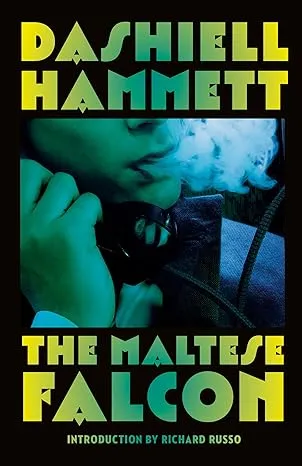
Get it on Amazon: The Maltese Falcon
Series: Sam Spade (standalone)
Published: 1930 Pages: 217
Sam Spade. The name alone conjures fedoras, cigarette smoke, and cynical one-liners. When Spade’s partner is murdered while investigating a case involving a priceless statuette, Spade gets tangled up with Brigid O’Shaughnessy, the quintessential femme fatale, and a cast of criminals all hunting the same prize.
This is the book that created the archetype. Spade isn’t a hero. He’s a professional doing a job in a corrupt world, and he follows his own code even when it costs him everything. The dialogue is sharp as a knife, the plot twists like a corkscrew, and the ending is gut-punch perfect.
Why it’s essential: This is where modern detective fiction begins. Hammett stripped away the genteel British mystery and replaced it with American grit. The 1941 film with Humphrey Bogart is iconic, but the book came first and set the template for everything that followed. If you only read one novel from the 1930s, make it this one.
Red Harvest by Dashiell Hammett

Get it on Amazon: Red Harvest
Series: The Continental Op #1
Published: 1929 Pages: 224
The Continental Op arrives in Personville (called “Poisonville” by locals) to investigate a murder, but he discovers the entire town is controlled by warring criminal factions. His solution? Set them against each other and watch the bloodbath unfold.
This book is BRUTAL. The body count is staggering, the violence is unflinching, and the Op’s methods are morally questionable at best. Hammett doesn’t sugarcoat corruption or violence. He shows you exactly how ugly things can get when law and order break down completely.
Why it’s essential: Red Harvest influenced everything from Yojimbo to A Fistful of Dollars to the Coen Brothers’ Miller’s Crossing. It’s the ultimate “burn it all down” noir novel and belongs on any list of essential crime fiction.
Fun fact: This was Hammett’s first novel, and it’s still considered by many critics to be his best.
The Big Sleep by Raymond Chandler
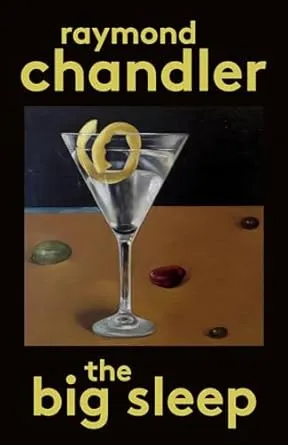
Get it on Amazon: The Big Sleep
Series: Philip Marlowe #1
Published: 1939 Pages: 231
Philip Marlowe is hired by a dying millionaire to deal with a blackmail case involving his wild daughter. What starts as a simple job spirals into murder, pornography, gambling, and layers of deception that even Marlowe can barely untangle.
Here’s the thing about The Big Sleep: the plot is famously convoluted. Even Chandler couldn’t remember who killed one of the characters when asked during filming. But that doesn’t matter. What matters is Marlowe’s voice, Chandler’s prose, and the atmosphere of corruption seeping through every page.
Why it’s essential: This is where I learned how to write dialogue. Marlowe’s wisecracks, his descriptions, his way of cutting through bullshit with a perfectly timed one-liner. Tommy Law’s dialogue style owes everything to Philip Marlowe. The 1946 film with Humphrey Bogart and Lauren Bacall is one of the greatest noirs ever made, but Chandler’s prose in the book is even sharper. This is easily one of the most influential detective novels for learning the style.
More info: The Big Sleep on Wikipedia
Farewell, My Lovely by Raymond Chandler

Get it on Amazon: Farewell, My Lovely
Series: Philip Marlowe #2
Published: 1940 Pages: 292
Marlowe encounters Moose Malloy, a hulking ex-con searching for his lost love Velma. What seems like a simple case pulls Marlowe into Los Angeles’s seedy underworld, involving jewel theft, murder, and corruption that reaches the city’s highest levels.
Many Chandler fans consider this his best novel. The prose is more polished than The Big Sleep, the plot actually makes sense, and Moose Malloy is one of noir’s most memorable characters. The ending is heartbreaking.
Why it’s essential: Chandler at his peak. The descriptions of 1940s Los Angeles are so vivid you can smell the orange blossoms and car exhaust. This is the book that cemented Marlowe as the definitive private eye and belongs among the essential crime novels ever published.
The Postman Always Rings Twice by James M. Cain
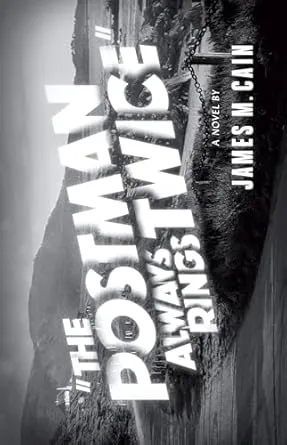
Get it on Amazon: The Postman Always Rings Twice
Series: Standalone
Published: 1934 Pages: 128
Frank Chambers drifts into a roadside diner and falls for Cora, the boss’s wife. They plot to murder her husband, collect the insurance money, and live happily ever after. Spoiler: it doesn’t work out that way.
This book is SHORT and BRUTAL. Cain strips the story down to its bare essentials: lust, greed, murder, and consequences. No wasted words, no philosophical musings, just two people destroying themselves and each other in 128 pages.
Why it’s essential: Cain invented the “domestic noir” subgenre. This isn’t about private eyes solving crimes. This is about ordinary people committing crimes and watching their lives spiral into hell. The 1946 film with Lana Turner and John Garfield is steamy as hell, but the book is even more brutal. It’s essential reading for understanding how the genre evolved beyond detective stories.
Double Indemnity by James M. Cain
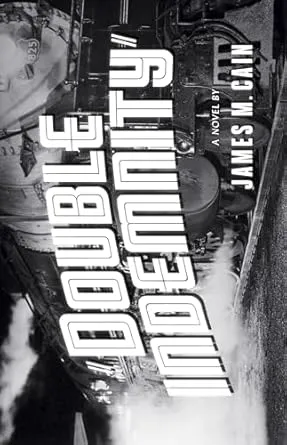
Get it on Amazon: Double Indemnity
Series: Standalone
Published: 1943 Pages: 115
Insurance salesman Walter Huff meets Phyllis Nirdlinger, and they scheme to murder her husband and collect the double indemnity payout. Claims investigator Barton Keyes starts digging, and the plan begins to unravel.
Cain based this on a real murder case, and the authenticity shows. The insurance details are meticulous, the psychology is chilling, and the femme fatale is as deadly as they come.
Why it’s essential: The perfect crime novel. Cain shows you exactly how the plan works, how it goes wrong, and how the protagonists’ own paranoia and greed destroy them. Billy Wilder’s 1944 film adaptation is considered one of the greatest noirs ever made, but the book is even darker and more claustrophobic.
Best Classic Noir Books (1940s-1950s)
The 1940s and 1950s were the golden age of noir literature. Writers pushed the boundaries of what crime fiction could do, exploring darker themes and more complex morality than ever before. If you’re searching for novels from the genre’s peak era, these classics defined what noir could be.
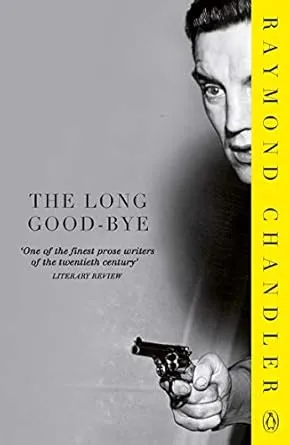
The Long Goodbye by Raymond Chandler
Get it on Amazon: The Long Goodbye
Series: Philip Marlowe #6
Published: 1953 Pages: 379
Marlowe befriends Terry Lennox, a down-on-his-luck war veteran. When Lennox’s wife is murdered and Lennox flees to Mexico, Marlowe gets dragged into a case involving a missing writer, a suspicious suicide, and corruption that goes deeper than he expected.
This is Chandler’s longest and most personal novel. It’s slower, more contemplative, and deals with themes of friendship, betrayal, and disillusionment in post-war America. Some readers find it too slow. I think it’s Chandler’s masterpiece, and the audiobook version lets you sink into Marlowe’s world-weary narration.
Why it’s essential: This is Marlowe at his most world-weary. The cynicism has deepened, the disillusionment is palpable, and the ending is devastating. It’s the book Chandler wrote when he realized the world hadn’t gotten better after the war.
The Thin Man by Dashiell Hammett

Get it on Amazon: The Thin Man
Series: Nick and Nora Charles #1
Published: 1934 Pages: 180
Retired detective Nick Charles and his wealthy wife Nora are pulled into investigating the disappearance of an eccentric inventor. It’s Christmas in New York, everyone’s drinking heavily, and bodies keep turning up.
This is Hammett’s most fun novel. Nick and Nora have witty banter, throw cocktail parties, and solve murders while maintaining a relationship that’s refreshingly functional for noir fiction. It’s dark, but it’s also genuinely funny.
Why it’s essential: Proves noir doesn’t have to be relentlessly grim. The 1934 film adaptation launched a successful series, but the book is sharper and darker than the movies suggest.
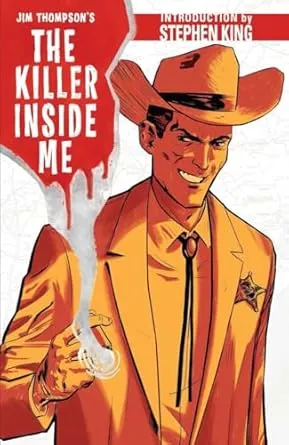
The Killer Inside Me by Jim Thompson
Get it on Amazon: The Killer Inside Me
Series: Standalone
Published: 1952 Pages: 244
Deputy Sheriff Lou Ford seems like a nice, simple-minded small-town lawman. He’s not. He’s a sociopath who hides behind a friendly facade while committing increasingly brutal murders.
Warning: This book is DARK. Thompson doesn’t flinch from violence, and Lou Ford’s narration is deeply disturbing. It’s brilliant, but it’s not for everyone. This is noir at its bleakest and most psychologically twisted.
Why it’s essential: Thompson created the unreliable narrator serial killer decades before it became a trope. This influenced everything from American Psycho to Dexter. It’s a masterpiece of psychological horror disguised as a crime novel and ranks among the darkest psychological thrillers ever written.
More info: Jim Thompson on Wikipedia
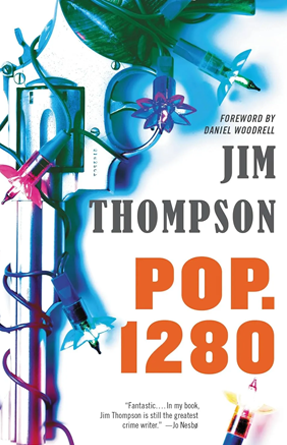
Pop. 1280 by Jim Thompson
Get it on Amazon: Pop. 1280
Series: Standalone
Published: 1964 Pages: 246
Sheriff Nick Corey runs a tiny town where he’s considered lazy and incompetent. He’s neither. He’s a calculating sociopath who manipulates everyone around him while committing murder and maintaining his folksy facade.
If The Killer Inside Me is Thompson’s most famous book, Pop. 1280 might be his best. It’s equally dark but has a pitch-black sense of humor that makes it slightly more palatable. Slightly.
Why it’s essential: Shows how noir evolved in the 1960s. Thompson took the genre to its darkest possible conclusions, exploring evil not as something external but as something woven into the fabric of small-town America.
The Friends of Eddie Coyle by George V. Higgins

Get it on Amazon: The Friends of Eddie Coyle
Series: Standalone
Published: 1970 Pages: 183
Eddie Coyle is a low-level Boston gun runner facing prison time. He becomes an informant for the ATF, but everyone in his world is playing angles, and nobody can be trusted.
This book is almost entirely dialogue. Higgins captures the rhythms of criminal conversation so perfectly that you feel like you’re eavesdropping on real criminals. No one writes criminal dialogue better than Higgins.
Why it’s essential: Influenced The Sopranos, The Wire, and every crime show that prioritizes naturalistic dialogue over exposition. The 1973 film with Robert Mitchum is excellent, but the book is even better.
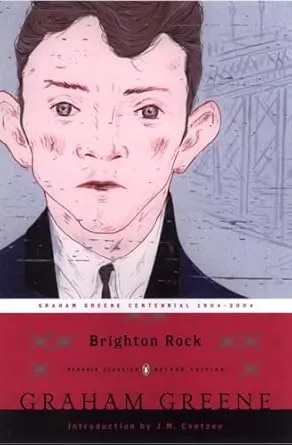
Brighton Rock by Graham Greene
Get it on Amazon: Brighton Rock
Series: Standalone
Published: 1938 Pages: 321
Pinkie Brown is a teenage gang leader in 1930s Brighton who commits murder to protect his territory. As the police close in, Pinkie marries a naive waitress who witnessed the crime, trapping them both in a spiral of violence and Catholic guilt.
Greene called this an “entertainment” rather than a serious novel, but it’s one of the finest British crime novels ever written. The atmosphere of Brighton’s seedy underworld is palpable, and Pinkie is a genuinely terrifying villain.
Why it’s essential: Proves noir isn’t just an American genre. Greene brings a distinctly British sensibility to crime fiction, with themes of sin, damnation, and moral decay that American noir rarely explored.
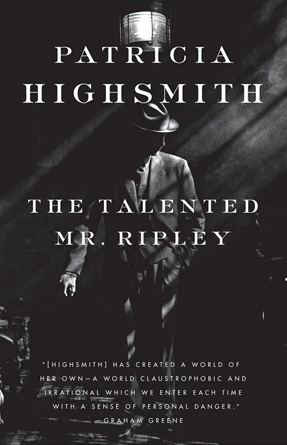
The Talented Mr. Ripley by Patricia Highsmith
Get it on Amazon: The Talented Mr. Ripley
Series: Ripliad #1
Published: 1955 Pages: 290
Tom Ripley is hired to travel to Italy and convince wealthy playboy Dickie Greenleaf to return home. Instead, Ripley becomes obsessed with Dickie’s lifestyle, murders him, and assumes his identity.
Highsmith does something revolutionary here: she makes you root for the killer. Ripley is charming, intelligent, and completely amoral. You shouldn’t like him, but Highsmith’s prose makes his perspective so compelling that you find yourself hoping he gets away with it.
Why it’s essential: The perfect psychological thriller. Highsmith wrote four more Ripley novels, and they’re all excellent, but this first one is the masterpiece. The 1999 film with Matt Damon is great, but the book is even more unsettling. This is easily one of the most compelling psychological thrillers ever written.
Strangers on a Train by Patricia Highsmith

Get it on Amazon: Strangers on a Train
Series: Standalone
Published: 1950 Pages: 256
Two strangers meet on a train. Charles wants his unfaithful wife dead. Bruno wants his father dead. Bruno proposes they “exchange” murders, since neither has a motive for the other’s victim. Charles thinks it’s a joke. Bruno doesn’t.
This is Highsmith’s debut novel, and it’s a perfect high-concept thriller. The psychological tension builds relentlessly as Bruno becomes obsessed with forcing Charles to complete their “deal.” Hitchcock’s 1951 film adaptation is a classic, but the book explores the characters’ psychology in ways the film couldn’t.
Why it’s essential: The perfect example of how noir moved from external crime to internal psychology. Highsmith is more interested in guilt, obsession, and the erosion of morality than in plot mechanics.
Golden Age Noir Books (1960s-1970s)
As the 1960s arrived, noir evolved. Writers experimented with structure, psychology, and subject matter, pushing the genre into new and often darker territory. These novels from the golden age show how the genre matured and deepened.
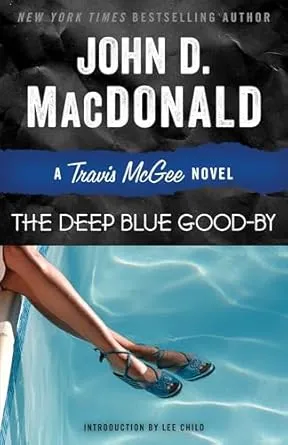
The Deep Blue Good-By by John D. MacDonald
Get it on Amazon: The Deep Blue Good-By
Series: Travis McGee #1 (21 books)
Published: 1964 Pages: 208
Travis McGee is a “salvage consultant” living on a houseboat in Florida. He recovers stolen property for 50% of the value, and in this first adventure, he’s tracking down a woman’s inheritance that was stolen by a psychopathic conman.
McGee is a different kind of noir hero. He’s philosophical, environmentally conscious, and genuinely tries to help people. The books are set in Florida’s sun-drenched beaches rather than dark city streets, but the moral ambiguity and violence are pure noir.
Why it’s essential: If you want a detective series to binge, this is it. 21 books, each with a color in the title, spanning from 1964 to 1985. MacDonald’s prose is beautiful, and McGee is one of the most fully realized characters in crime fiction.
Fun fact: MacDonald wrote these books incredibly fast, sometimes completing one in a month. The quality never dropped.
Mildred Pierce by James M. Cain

Get it on Amazon: Mildred Pierce
Series: Standalone
Published: 1941 Pages: 310
Mildred Pierce leaves her husband during the Depression and builds a successful restaurant business to provide for her daughters. Her ungrateful daughter Veda becomes increasingly manipulative and cruel, leading to tragic consequences.
This isn’t a crime novel in the traditional sense. There’s no detective, no murder mystery (until the very end). But it’s noir to its core: a character making increasingly desperate choices, sacrificing everything for a dream that destroys her.
Why it’s essential: Shows how noir expanded beyond crime fiction. The 1945 film with Joan Crawford is a classic, and the 2011 HBO miniseries with Kate Winslet is even better. But the book is the bleakest and most devastating version.
Night and the City by Gerald Kersh

Get it on Amazon: Night and the City
Series: Standalone
Published: 1938 Pages: 320
Harry Fabian is a small-time hustler in London’s underworld who dreams of making it big as a wrestling promoter. His schemes get increasingly desperate and dangerous, leading to a nightmarish chase through London’s streets.
This book is INTENSE. Kersh’s prose is feverish and hallucinatory, capturing Fabian’s paranoia and desperation as his world collapses. The 1950 film noir adaptation directed by Jules Dassin is excellent, but the book is even more nightmarish.
Why it’s essential: One of the great British crime novels. Kersh captures London’s criminal underworld with the same intensity Chandler brought to Los Angeles. It’s exhausting and brilliant.
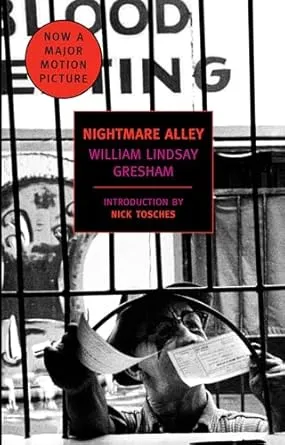
Nightmare Alley by William Lindsay Gresham
Get it on Amazon: Nightmare Alley
Series: Standalone
Published: 1946 Pages: 247
Stanton Carlisle works at a carnival, learning the tricks of the mentalist trade. He parlays his skills into a high-society career as a spiritualist, conning wealthy clients. His arrogance and greed lead to a devastating fall.
This is one of the darkest noir novels ever written. Gresham doesn’t flinch from showing the seediness of carnival life or the depths Carlisle sinks to. The ending is one of the most brutal in noir literature.
Why it’s essential: The 1947 film with Tyrone Power is a classic, and Guillermo del Toro’s 2021 remake is even better. But the book is the bleakest and most unflinching version. It’s a masterpiece of American noir.
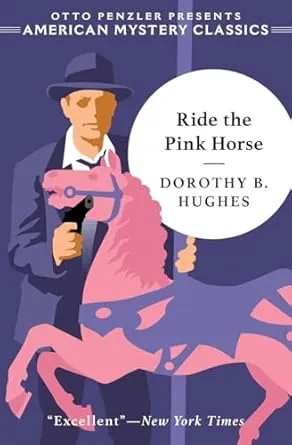
Ride the Pink Horse by Dorothy B. Hughes
Get it on Amazon: Ride the Pink Horse
Series: Standalone
Published: 1946 Pages: 182
Sailor arrives in Santa Fe during a fiesta to blackmail the man responsible for his friend’s murder. As he navigates the colorful celebrations, he’s pursued by both the police and the criminals who want him dead.
Hughes is one of noir’s most underrated writers. Her prose is beautiful, and she captures the surreal atmosphere of the Santa Fe fiesta perfectly. The contrast between the bright, festive setting and the dark story creates a dreamlike tension.
Why it’s essential: Proves female noir writers could match or exceed their male counterparts. Hughes wrote several excellent crime novels, but this is her masterpiece.
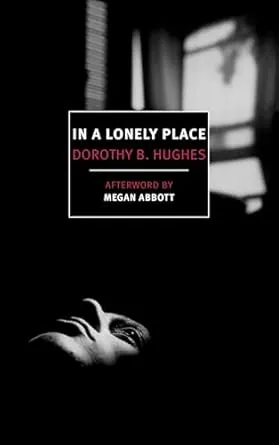
In a Lonely Place by Dorothy B. Hughes
Get it on Amazon: In a Lonely Place
Series: Standalone
Published: 1947 Pages: 246
Dix Steele is a disturbed war veteran living in post-war Los Angeles. Women are being murdered, and Dix might be the killer. Or he might just be paranoid. Hughes keeps you guessing until the very end.
The 1950 film with Humphrey Bogart is a classic, but it completely changes the story. The book is darker, more ambiguous, and more psychologically complex.
Why it’s essential: Hughes explores post-war trauma and toxic masculinity decades before those terms existed. It’s a brilliant psychological thriller that holds up better than most noir from the 1940s.
Best Modern Noir Books
Noir didn’t die with the 1950s. Modern writers have taken the genre in new directions while maintaining the moral complexity and darkness that define it. These novels prove the genre is alive and thriving.
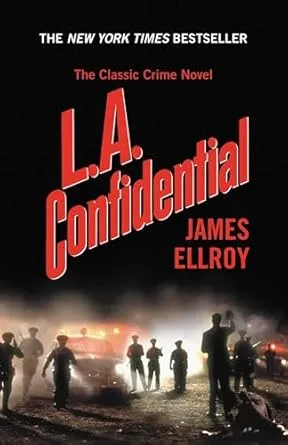
L.A. Confidential by James Ellroy
Get it on Amazon: L.A. Confidential
Series: L.A. Quartet #3
Published: 1990 Pages: 496
Three LAPD detectives investigate a mass murder at a coffee shop in 1950s Los Angeles. Each has their own agenda, and as they dig deeper, they uncover corruption that goes to the highest levels of city government.
Ellroy’s prose is dense, punchy, and relentless. He uses staccato sentences, period slang, and rapid-fire plotting that makes the 496 pages feel like a sprint. This isn’t easy reading, but it’s incredibly rewarding.
Why it’s essential: The 1997 film won two Oscars and is considered one of the best neo-noirs ever made. The book is even better, more complex, and more brutal. Ellroy took classic noir and supercharged it for modern readers. This is the defining crime novel of the 1990s.
More info: James Ellroy’s Website
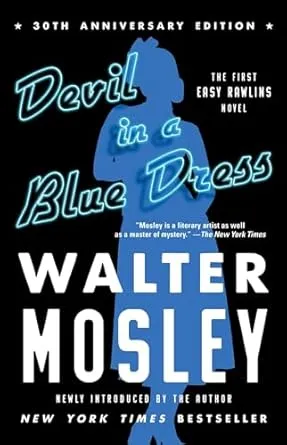
Devil in a Blue Dress by Walter Mosley
Get it on Amazon: Devil in a Blue Dress
Series: Easy Rawlins #1 (14 books)
Published: 1990 Pages: 219
Easy Rawlins is a Black war veteran in 1948 Los Angeles who loses his job and agrees to find a missing white woman to pay his mortgage. The case pulls him into the city’s underworld and forces him to navigate racism, violence, and corruption.
Mosley does something crucial here: he centers the Black experience in noir fiction. Easy faces threats not just from criminals but from racist cops and a society that sees him as suspicious regardless of what he does. His friend Mouse is one of noir’s most memorable characters.
Why it’s essential: Expands noir beyond white protagonists and shows how race shapes the detective story. The 1995 film with Denzel Washington is excellent, but Easy’s internal voice in the books gives it extra depth. This belongs on any list of essential modern crime fiction.
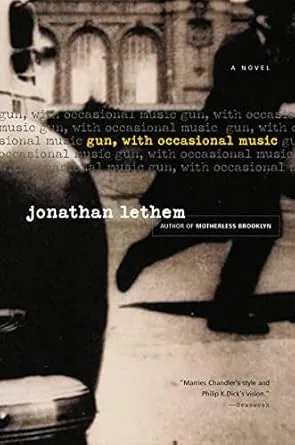
Gun, With Occasional Music by Jonathan Lethem
Get it on Amazon: Gun, With Occasional Music
Series: Standalone
Published: 1994 Pages: 272
Private investigator Conrad Metcalf operates in a future where drugs are legal, asking questions is illegal, and genetically evolved animals walk the streets as citizens. He investigates a murder in pure hard-boiled style, but in a world that’s gone completely insane.
This is Philip Marlowe meets Philip K. Dick. Lethem takes all the tropes of hard-boiled detective fiction and transplants them into a surreal sci-fi future. It’s weird, funny, and surprisingly noir despite the talking kangaroos.
Why it’s essential: Proves noir can work in any setting. Lethem captures Chandler’s voice perfectly while creating something completely original. If you ever wondered what Blade Runner would be like as a Raymond Chandler novel, read this.
Noir Graphic Novels
Noir translated perfectly to comics, where shadow and light can be manipulated visually to create atmosphere. These two series represent the finest noir in graphic novel form.
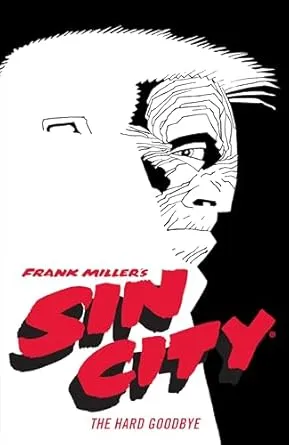
Sin City: The Hard Goodbye by Frank Miller
Get it on Amazon: Sin City: The Hard Goodbye
Series: Sin City #1
Published: 1991-1992 (collected 1992)
Creator: Frank Miller
Marv wakes up next to a dead woman and realizes he’s been framed for murder. With nothing to lose, he goes on a rampage through Basin City to find who killed her and why.
Miller’s black-and-white art is STUNNING. He uses shadows, silhouettes, and stark contrast to create a visual style that’s pure noir. The violence is extreme, the dialogue is pulpy, and the whole thing feels like a fever dream version of a 1940s crime film.
Why it’s essential: Robert Rodriguez’s 2005 film adaptation tried to recreate Miller’s art style frame-by-frame, and it worked brilliantly. But the comics are the definitive version. If you only read one noir graphic novel, make it this.
Where to start: The Hard Goodbye is the first story, but each Sin City tale stands alone. There are seven main volumes, all excellent.
More info: Dark Horse Comics
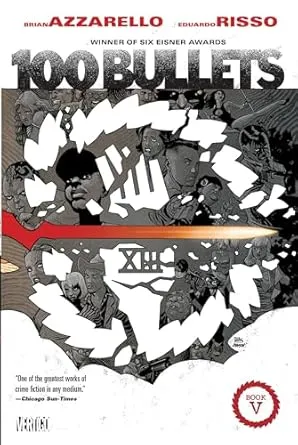
100 Bullets by Brian Azzarello and Eduardo Risso
Get it on Amazon: 100 Bullets: First Shot, Last Call
Series: 100 Bullets (100 issues, 2000-2009)
Creators: Brian Azzarello (writer), Eduardo Risso (artist)
Agent Graves approaches ordinary people who’ve been wronged and gives them an attaché case containing proof of who wronged them, a gun, and 100 untraceable bullets. They have full immunity. What would you do?
Each arc starts as a standalone revenge story, but Azzarello weaves them together into a massive conspiracy involving secret organizations, betrayals, and noir plotting that rivals the finest crime novels. Risso’s art is gorgeous, capturing both the grit and the style of noir perfectly.
Why it’s essential: Won multiple Eisner and Harvey Awards. This is noir comics at its most ambitious, taking the genre’s themes and expanding them across 100 issues without losing momentum. It’s like The Wire meets classic noir.
Where to start: First Shot, Last Call collects the first five issues. There are 13 trade paperbacks total, or you can get the deluxe hardcover editions that collect larger chunks.
More info: 100 Bullets on Wikipedia
Love Noir? Try Audio Drama
If you loved these novels, you’ll love Tommy Law: Private Eye. It’s a noir detective audio drama with a comedic twist, inspired by everything on this list: Marlowe’s wisecracks, Hammett’s violence, Chandler’s atmosphere, all brought to life with full voice acting, cinematic sound design, and original music.
Think The Big Sleep meets The Nice Guys, but for your ears.
The mysteries are clever, the dialogue is sharp as a knife, and the noir atmosphere is thick enough to cut with a fedora. If you just spent hours reading about hard-boiled detectives, why not hear one in action?
Listen to Episode 1: The Haunted Inheritance
Where to Buy Noir Books
Amazon
I’ve linked to Amazon throughout this post because it’s convenient and many of these novels are available with Prime shipping. As an Amazon Associate, I earn from qualifying purchases, which helps support Tommy Law: Private Eye at no extra cost to you.
Pros: Fast shipping, Kindle versions available, easy returns
Cons: Not always the cheapest option
Thriftbooks.com
Thriftbooks is my secret weapon for building a noir collection cheaply. You can find most of these books for $3 to $5 in used condition, and their condition grading is honest.
Pros: Incredibly cheap, huge selection, free shipping over $15
Cons: Used books only (but often in great condition)
Pro tip: Search for the author’s name and browse their entire catalog. You’ll discover hidden gems you didn’t know existed.
Local Used Bookstores
There’s something perfect about hunting for noir novels in dusty used bookstores. You’ll find vintage paperbacks with amazing cover art, first editions if you’re lucky, and you’re supporting local businesses.
Bonus: Used bookstores often have knowledgeable staff who can recommend books based on what you like.
Your Local Library
Don’t overlook the library. Most of these classics are available, and if they’re not, you can request them. Many libraries also offer e-books and audiobooks through apps like Libby and Hoopla.
Completely free is the best price.
Frequently Asked Questions About Noir Books
What are the best noir books for beginners?
The best noir books for beginners are:
- The Maltese Falcon by Dashiell Hammett (217 pages, fast-paced, created the hard-boiled detective)
- The Big Sleep by Raymond Chandler (231 pages, perfect dialogue, introduces Philip Marlowe)
- Double Indemnity by James M. Cain (only 115 pages, teaches noir plotting)
For modern noir beginners, try L.A. Confidential by James Ellroy or Devil in a Blue Dress by Walter Mosley.
All of these are under 300 pages, move quickly, and teach you what makes noir special.
What is the best noir book of all time?
The Maltese Falcon by Dashiell Hammett (1930) is widely considered the best noir book of all time. It created the hard-boiled detective archetype with Sam Spade and established the template for every noir story that followed. Raymond Chandler’s The Big Sleep (1939) is a close second.
What should I read if I like noir?
If you like noir, start with the founding fathers: Dashiell Hammett (The Maltese Falcon, Red Harvest), Raymond Chandler (The Big Sleep, The Long Goodbye), and James M. Cain (Double Indemnity, The Postman Always Rings Twice). For modern noir, try James Ellroy’s L.A. Confidential or Walter Mosley’s Devil in a Blue Dress.
What order should I read noir books?
Read noir novels in this order:
- The Maltese Falcon by Dashiell Hammett (1930) – Start here
- The Big Sleep by Raymond Chandler (1939) – Learn the style
- Double Indemnity by James M. Cain (1943) – See domestic noir
- Then explore: Jim Thompson, Patricia Highsmith, or modern authors like James Ellroy
This order shows you how the genre evolved from hard-boiled detectives to psychological darkness.
Are noir books hard to read?
No, noir novels are generally easy to read. Most classic noir novels are short (200-300 pages), fast-paced, and written in straightforward prose. Raymond Chandler’s books have more literary flourishes, but the dialogue and action move quickly. Modern novels like James Ellroy use dense, punchy prose that takes more focus.
What’s the difference between noir and hard-boiled fiction?
They’re closely related but not identical. Hard-boiled refers to a tough, realistic style of detective fiction that emerged in the 1920s (Hammett, Chandler). Noir is darker and more pessimistic, focusing on moral ambiguity, doomed protagonists, and bleak outcomes. All noir is hard-boiled, but not all hard-boiled fiction is noir. The finest novels combine both elements.
Who are the founding fathers of noir books?
Dashiell Hammett, Raymond Chandler, and James M. Cain. Hammett created the hard-boiled detective. Chandler perfected the style and prose. Cain invented domestic noir. Everything else builds on their foundation. These three wrote the defining novels of the entire genre.
Are noir books the same as mystery novels?
No. Traditional mystery novels focus on solving puzzles and restoring order. Noir focuses on moral corruption, doomed characters, and often ends without clear resolution. In a mystery, the detective solves the case. In noir, everyone loses.
What makes a book “noir”?
Noir novels typically feature: morally ambiguous protagonists, femme fatales, urban settings, cynical worldviews, corruption, violence, doomed romance, and bleak or ambiguous endings. The atmosphere is as important as the plot.
Why is noir called noir?
“Noir” is French for “black.” French film critics coined the term “film noir” in the 1940s when they noticed American crime films had become darker and more cynical after World War II. The term was later applied to the novels that inspired these films, written by Hammett, Chandler, and Cain.
What is the most famous noir book?
The Maltese Falcon by Dashiell Hammett (1930) is the most famous noir book. It introduced Sam Spade and created the hard-boiled detective archetype. The 1941 film with Humphrey Bogart made it a cultural icon, but the book came first and defined the entire genre.
Is Raymond Chandler or Dashiell Hammett better noir authors?
Both are essential, but they’re different. Dashiell Hammett created the hard-boiled detective with The Maltese Falcon and wrote the most brutal noir (Red Harvest). Raymond Chandler perfected the style with beautiful prose and Philip Marlowe’s wisecracks. Start with Hammett for raw noir, Chandler for literary noir.
Where can I buy cheap noir books?
Thriftbooks.com is your best bet for finding cheap copies. Most classic noir novels are $3 to $5. Local used bookstores are also great for finding vintage paperbacks with amazing cover art.
Did noir books inspire film noir?
Absolutely. Most classic film noirs from the 1940s and 1950s were adapted from these novels. The Maltese Falcon, Double Indemnity, The Big Sleep, The Postman Always Rings Twice, and dozens more were books first. The visual style of film noir was influenced by the dark, cynical tone of the novels.
What are the best modern noir novels?
The best modern noir novels include L.A. Confidential by James Ellroy, Devil in a Blue Dress by Walter Mosley, and Gun, With Occasional Music by Jonathan Lethem—all bringing noir into contemporary settings while maintaining the genre’s core themes. For something recent, check out the Criminal graphic novel series by Ed Brubaker and Sean Phillips.
Start Your Noir Journey
Twenty-five essential novels. From Hammett’s hard-boiled detectives to Thompson’s psychopaths to Highsmith’s morally ambiguous antiheroes. These are the books that defined noir, inspired classic film noir, shaped old-time radio detective shows, and continue to influence crime fiction today.
My recommendation? Start with The Big Sleep. Read it in one sitting if you can, let Marlowe’s voice get in your head, and see why this style of writing changed detective fiction forever. Then work your way through the founding fathers before diving into the darker waters of Thompson and Highsmith. These novels will show you the genre’s evolution.
These books taught me how to write dialogue, create atmosphere, and build a morally complex world. They’re the reason Tommy Law: Private Eye sounds the way it does, cynical but funny, dark but hopeful, noir but modern.
Now grab a whiskey, settle into your favorite chair, and start reading the best noir books of all time. The shadows are waiting.
And if you want to hear noir brought to life with sound? Listen to Tommy Law: Private Eye
Related Posts You Might Enjoy
- Best Film Noir Movies: 25 Classic & Neo-Noir Films To Watch
- Best Detective Podcasts: 15 Mystery Audio Dramas Worth Binge-Listening
- Old Time Radio Detective Shows: Complete Beginner’s Guide to Classic Detective Dramas
- What is Audio Drama? The Complete Guide to Fiction Podcasts
- Best Mystery Audiobooks: 30 Top Audiobook Recommendations